Addicted to Something?
Is Everyone Addicted to Something?
Addiction, Dependency Loops, and the Habits of the Modern Mind
The question sounds extreme at first: Is everyone addicted to something? Most people will immediately reject it because they associate addiction with drugs, alcohol, gambling, or visibly destructive behavior. But the question becomes more difficult when we look beyond the word addiction and examine how people actually live. What do we repeat every day? What do we reach for when we are stressed, bored, lonely, anxious, tired, insecure, or overwhelmed? What do we use to regulate our mood, escape discomfort, create stimulation, or feel temporarily in control?
The answer is not that everyone is clinically addicted. That would be too broad and medically inaccurate. Addiction has a specific meaning. The National Institute on Drug Abuse defines addiction as a chronic disorder involving compulsive drug seeking and use despite harmful consequences, and the Centers for Disease Control and Prevention describes addiction as involving substances or behaviors that become compulsive and often continue despite harmful consequences (Centers for Disease Control and Prevention [CDC], 2024; National Institute on Drug Abuse [NIDA], 2020).
A more accurate answer is that many people today are not clinically addicted, but they are dependent on one or more daily loops that function like emotional, chemical, social, or psychological regulators. These are not always addictions. Many are habits. Some are coping mechanisms. Some are routines. Some are socially accepted dependencies. But when repeated often enough, especially under stress, they can begin to control attention, behavior, mood, and identity.
Dependency Loops are Behavioral Addiction is Clinical
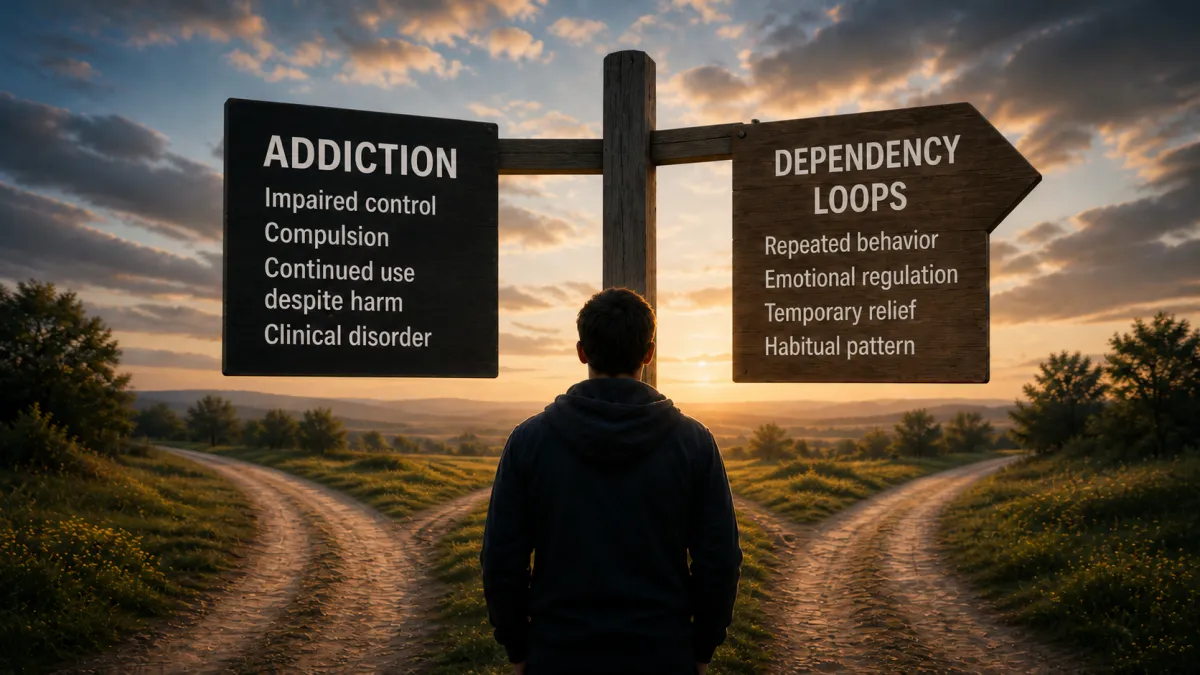
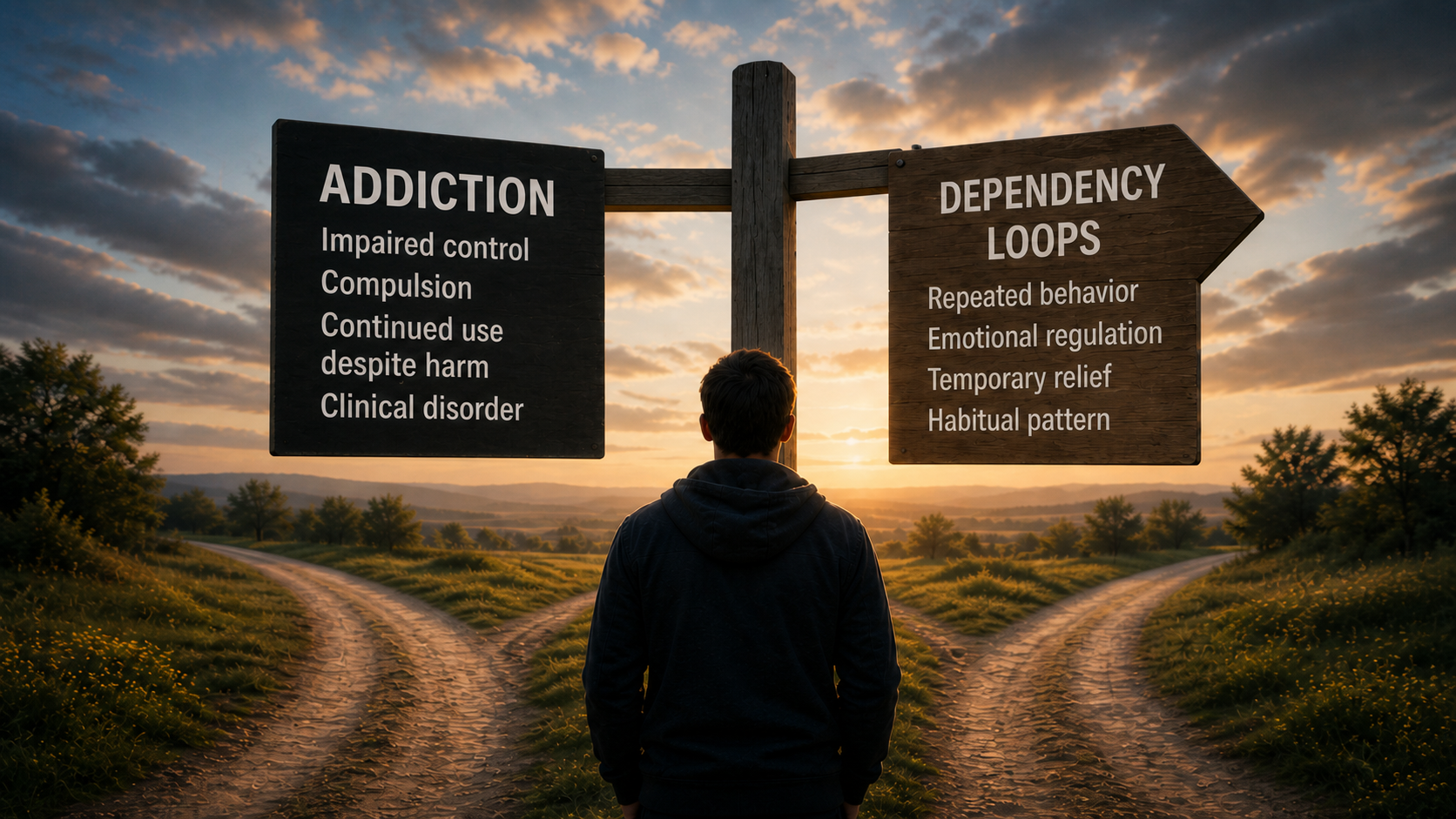
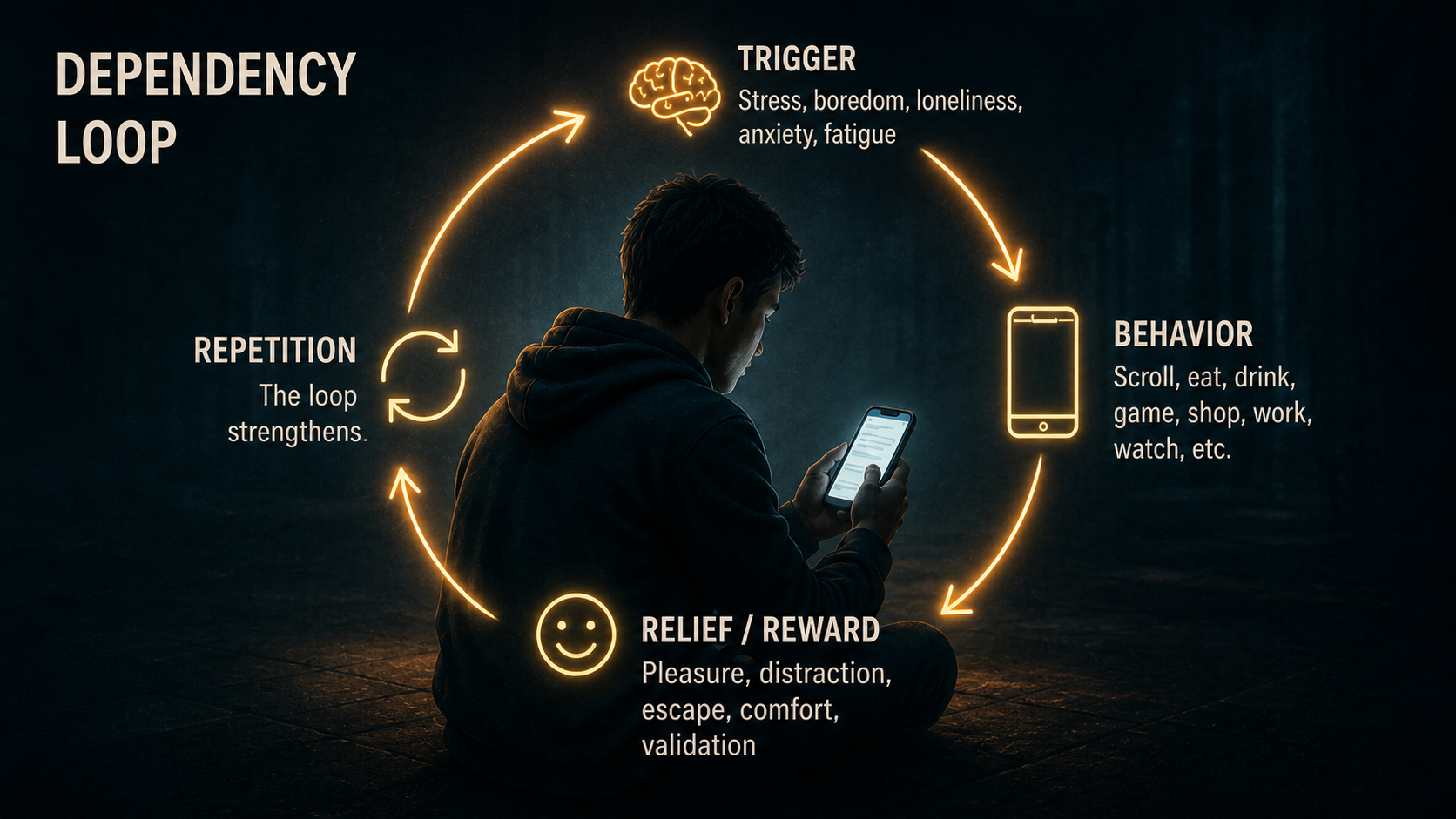
This is where the distinction matters. Addiction is clinical. Dependency loops are behavioral. Addiction involves impaired control, compulsion, and continued use despite harm. A dependency loop is broader. It is a repeated cycle where a person experiences a trigger, reaches for a behavior, receives some form of relief or reward, and then becomes more likely to repeat that behavior the next time the trigger appears. Habit research supports this basic structure: repeated behaviors in stable contexts can become increasingly automatic, and habit formation is closely tied to repeated cues and rewards (Gardner et al., 2012).
In simple terms, a dependency loop looks like this:
Trigger -> Behavior -> Relief or Reward -> Repetition -> Dependence
The trigger might be stress. The behavior might be scrolling, eating, drinking, spending, working, arguing, watching videos, gaming, checking messages, or seeking sexual validation. The reward might be pleasure, distraction, emotional relief, stimulation, control, or numbness. Over time, the person may not even choose the behavior consciously. The loop chooses for them.
Modern life has made these loops easier to build than ever before. The problem is not simply that people have weak willpower. The problem is that the environment is engineered around repetition. Phones, apps, streaming platforms, processed foods, caffeine, online shopping, gambling mechanics, outrage media, pornography, productivity culture, and social validation systems all create repeatable cues and rewards. The modern world gives people instant access to stimulation, relief, identity, distraction, and escape.
What Does the Data Say?
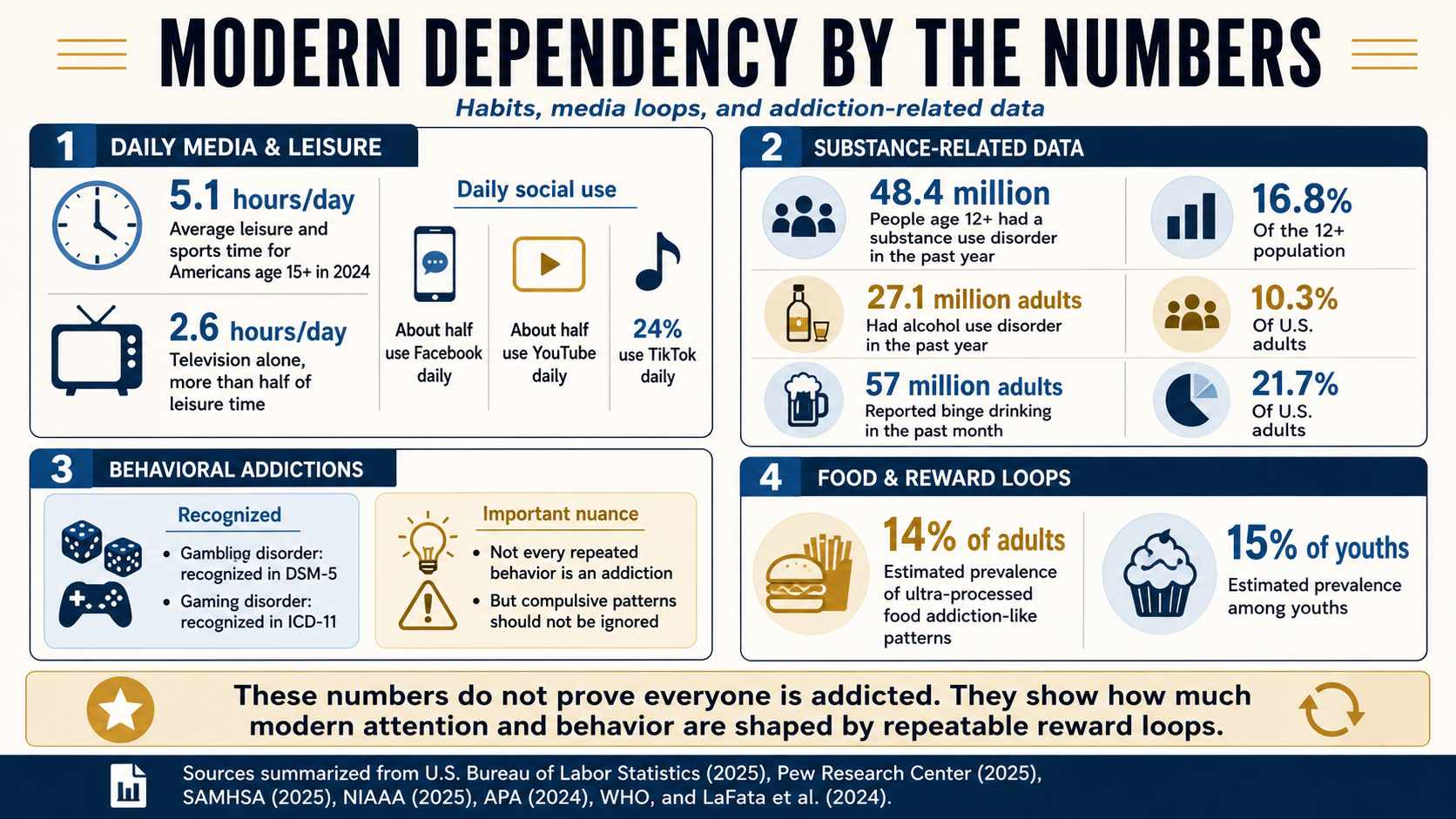
The data shows how deeply repeated behaviors now shape daily life. In 2024, Americans age 15 and older averaged about 5.1 hours per day in leisure and sports activities, with television alone taking about 2.6 hours per day, more than half of all leisure time (U.S. Bureau of Labor Statistics, 2025). Pew Research Center’s 2025 data shows that about half of U.S. adults use Facebook and YouTube daily, with many using them several times a day; 24% use TikTok daily (Gottfried & Park, 2025). These numbers do not prove addiction by themselves, but they show how much of modern attention is captured by repeatable media loops.
Substance-related data shows the clinical side of the issue. According to SAMHSA’s 2024 National Survey on Drug Use and Health, 48.4 million people age 12 or older, or 16.8% of that population, had a substance use disorder in the past year (Center for Behavioral Health Statistics and Quality, 2025). Alcohol remains one of the most normalized examples. NIAAA reports that in 2024, 27.1 million U.S. adults, or 10.3% of adults, had alcohol use disorder in the past year (National Institute on Alcohol Abuse and Alcoholism [NIAAA], 2025a). At the same time, millions more drink in risky patterns without necessarily meeting the threshold for addiction. In 2024, 57 million adults, or 21.7%, reported binge drinking in the past month (NIAAA, 2025b). This distinction is important: a behavior can be risky, habitual, or dependency-forming without always meeting the clinical threshold of addiction.
Behavioral addictions are also recognized, but more narrowly than popular culture suggests. Gambling disorder is classified in DSM-5 as a behavioral addiction, while gaming disorder is recognized in the ICD-11 when gaming behavior involves impaired control, increased priority over other activities, continuation despite negative consequences, and significant impairment (American Psychiatric Association, 2024; World Health Organization, n.d.). This means we should not casually diagnose every repeated behavior as an addiction. But we also should not ignore how repeated behaviors can become compulsive, especially when they regulate emotional discomfort.
Food is another example. Eating is necessary. Food addiction is not the same as hunger. The concern is not normal eating, but the way certain ultra-processed foods may produce addiction-like patterns in some people. A 2024 research update reported that systematic reviews across 36 countries estimated ultra-processed food addiction prevalence at about 14% of adults and 15% of youths (LaFata et al., 2024). Again, the issue is not that everyone who eats processed food is addicted. The issue is that modern products can be designed around high reward, easy access, and repeated use.
Top 10 Daily Loops
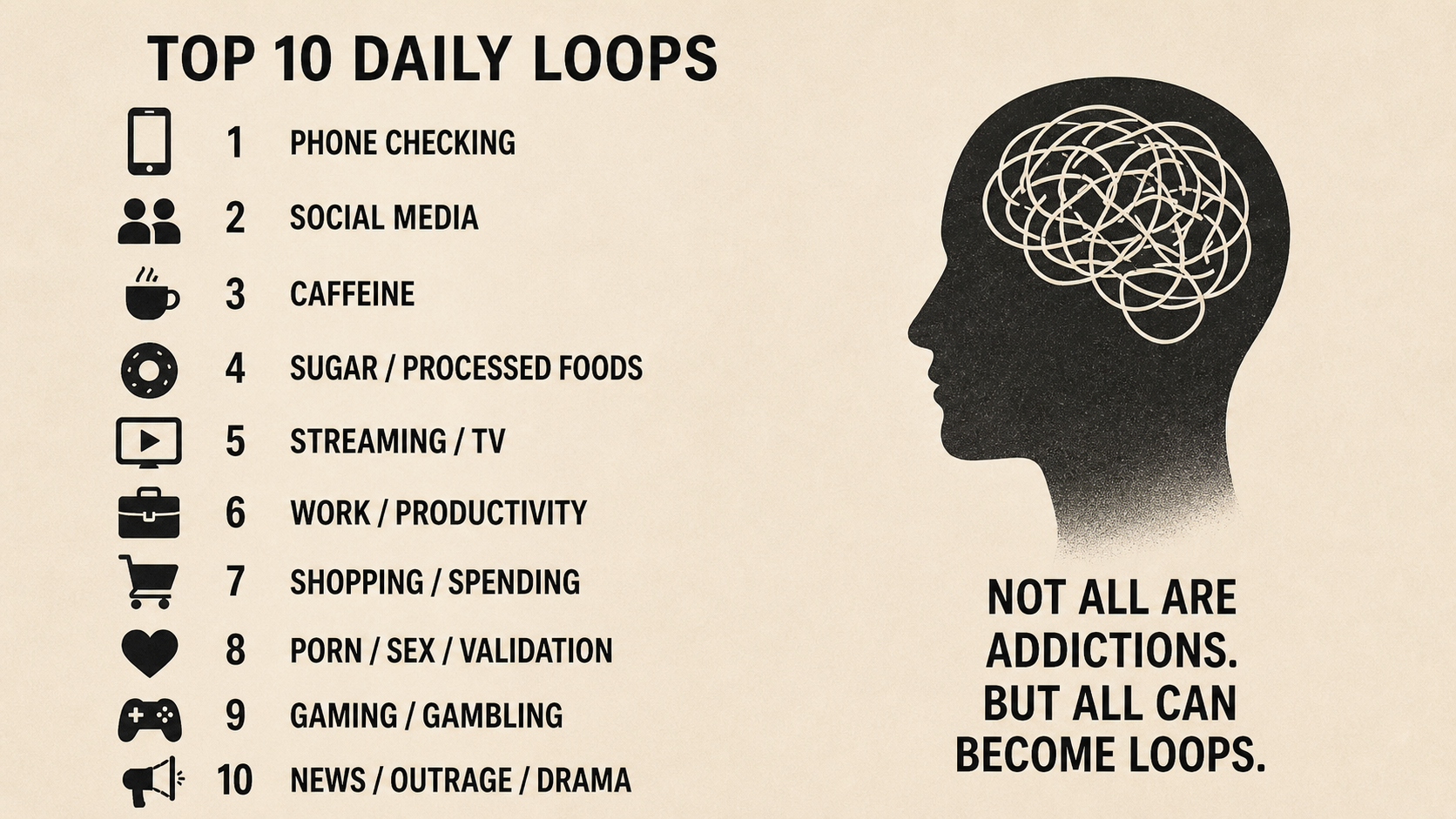
This is why the top ten daily habits of a person may reveal more than their personality. They may reveal their dependency map.
A person’s top ten daily loops might include:
Phone checking
Social media
Caffeine
Sugar or ultra-processed foods
Streaming or television
Work and productivity
Shopping or spending
Porn, sex, or dating validation
Gaming, gambling, or risk-based stimulation
News, outrage, conflict, or drama
None of these is automatically an addiction. Work can be meaningful. Food can be nourishment. Technology can be useful. Caffeine can be moderate. Entertainment can be restorative. But each can become a dependency loop when a person cannot regulate without it. The key question is not simply, “Do I do this every day?” The better question is:
What happens inside me when I cannot do it?
If a person becomes anxious, irritable, empty, distracted, restless, ashamed, defensive, or emotionally unstable when the behavior is removed, the behavior may be doing more than they admit. It may be serving as a regulator.
This connects directly to anxiety and attention. It would be inaccurate to say dependency loops “cause” all anxiety, ADHD, or mental health conditions. Anxiety disorders and ADHD are real clinical conditions with biological, developmental, psychological, and environmental factors. NIMH estimates that 19.1% of U.S. adults experience an anxiety disorder in a given year, and 31.1% experience one at some point in life (National Institute of Mental Health [NIMH], n.d.). CDC data from 2023 estimated that 15.5 million U.S. adults, or 6%, had a current ADHD diagnosis (Staley et al., 2024). These conditions should not be reduced to “bad habits.”
Top 10 Daily Loops Anxiety and Attention Fragmentation
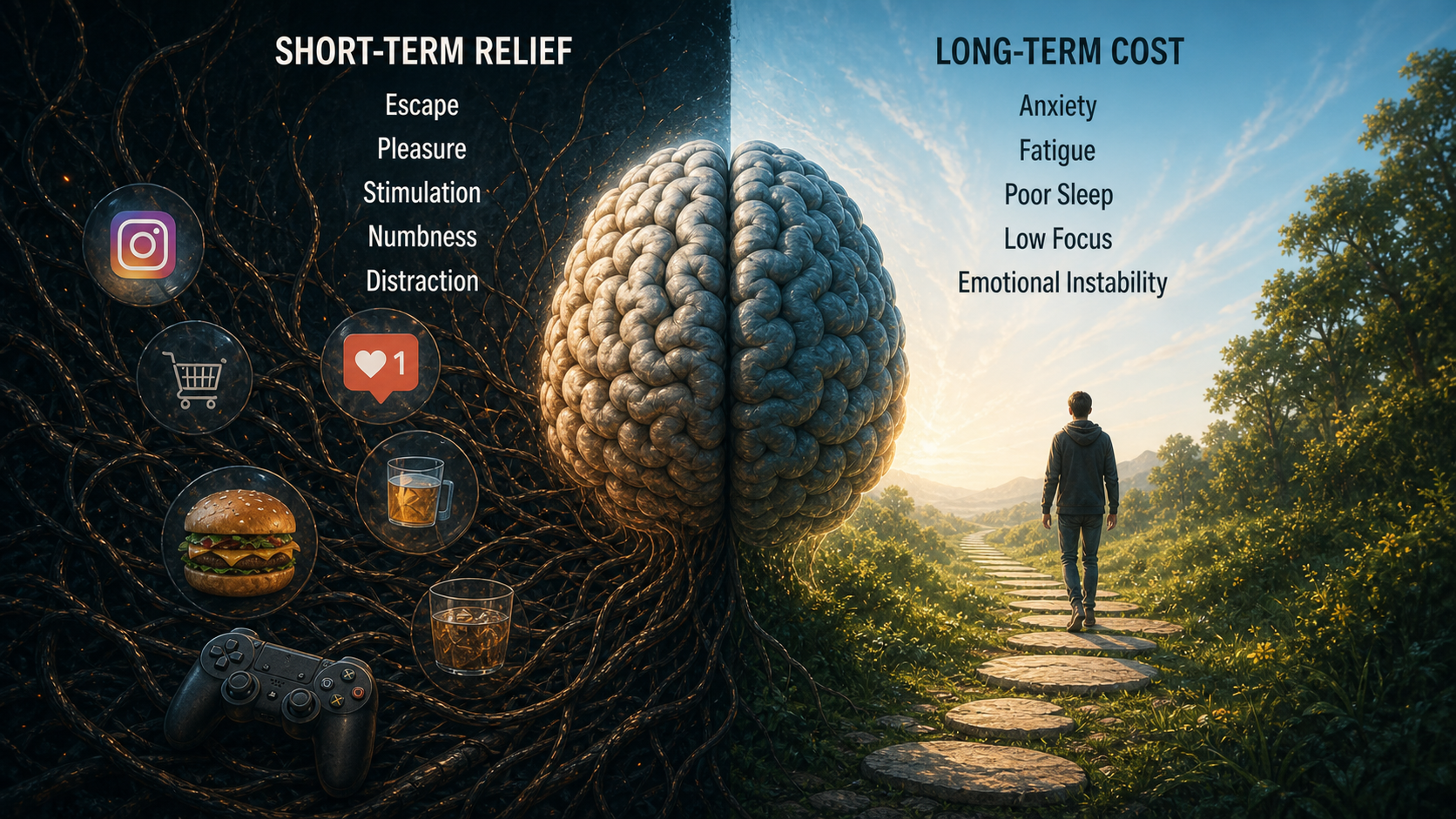
But modern dependency loops can intensify symptoms that look like anxiety and attention fragmentation. Constant stimulation trains the mind to expect interruption. Constant reward trains the brain to resist boredom. Constant comparison can increase insecurity. Constant outrage keeps the nervous system activated. Constant content consumption can reduce stillness. Constant productivity can make rest feel unsafe.
Sleep is one of the clearest bridges between behavior and mental health. In 2024, CDC data showed that 30.5% of U.S. adults slept less than seven hours on average in a 24-hour period (Ng et al., 2026). Poor sleep does not explain every mental health issue, but it can worsen mood regulation, attention, stress tolerance, and impulse control. CDC also identifies insufficient sleep as being associated with multiple chronic health risks and mental health concerns (CDC, 2024). When people are tired, anxious, and overstimulated, they become more vulnerable to dependency loops. Then the loops often make the original problem worse.
That is the trap. A person feels anxious, so they scroll. The scrolling creates temporary relief. But it also exposes them to comparison, conflict, stimulation, and distraction. Then they feel more scattered. So they scroll again. A person feels exhausted, so they drink more caffeine. The caffeine helps temporarily, but later may interfere with sleep. Poor sleep creates more exhaustion. Then they need more caffeine. A person feels lonely, so they seek attention online. The attention helps for a moment, but it may not produce real connection. Then the loneliness returns stronger.
That is not always addiction. But it is dependence.
The modern crisis is not only a substance crisis. It is also a repetition crisis. People are repeating behaviors that give short-term relief but long-term instability. They are not always choosing pleasure. Often, they are choosing escape. They are not always chasing happiness. Often, they are trying to silence discomfort.
This is why the original question matters. Is everyone addicted to something? Clinically, no. But behaviorally, many people are dependent on something. Many are dependent on distraction, stimulation, validation, productivity, conflict, food, caffeine, entertainment, sex, shopping, substances, or digital attention. These dependencies may not destroy their lives immediately. They may even look normal. But normal does not always mean healthy. The more truthful answer is:
Everyone may not be addicted, but nearly everyone should examine what they repeatedly use to regulate themselves.
That is the real issue. Addiction is the extreme end of a larger spectrum. Before addiction, there is habit. Before habit, there is repetition. Before repetition, there is relief. And wherever a person repeatedly seeks relief, there is a loop worth studying.
The goal is not to shame people for having habits. Human beings need rhythm. We need routines. We need comfort. We need rest. We need pleasure. The goal is to separate healthy structure from unconscious dependence. A healthy habit strengthens freedom. A dependency loop quietly reduces freedom. An addiction damages freedom while convincing the person they are still in control. That may be the clearest distinction. So the paper does not need to prove that everyone is addicted. It needs to show something more precise and more useful. Modern life has blurred the line between habit, dependence, and addiction.
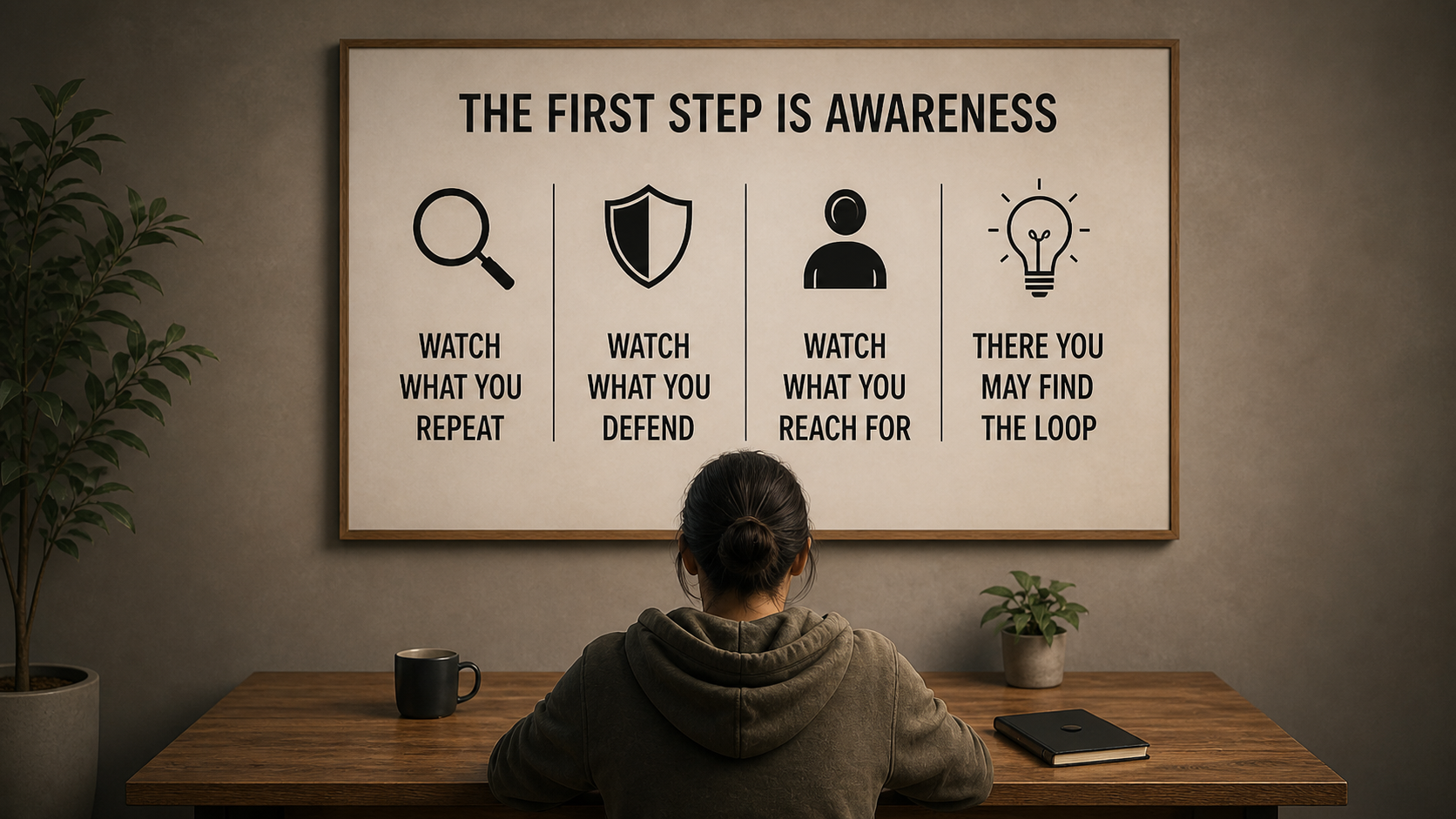
Many people are not clinically addicted, but they are living inside dependency loops that shape their anxiety, attention, mood, decisions, relationships, and sense of self. The first step is not diagnosis. The first step is awareness. Watch what you repeat. Watch what you defend. Watch what you reach for when you are uncomfortable. There, you may find the thing that has more control than you realized. And once a person sees the loop, they can begin to change it.
Message brought to you by Doc Reo and the research team at AI No HYPE

References
Links for your review. Not APA7 but who cares. EASIER TO READ FOR YOURSELF
American Psychiatric Association. (2024, May). What is gambling disorder? https://www.psychiatry.org/patients-families/gambling-disorder/what-is-gambling-disorder
Centers for Disease Control and Prevention. (2024, February 26). Understanding addiction to support recovery. https://www.cdc.gov/stop-overdose/stigma-reduction/understanding-addiction.html
Centers for Disease Control and Prevention. (2024, June 3). Sleep. Chronic Disease Indicators. https://www.cdc.gov/cdi/indicator-definitions/sleep.html
Center for Behavioral Health Statistics and Quality. (2025). Key substance use and mental health indicators in the United States: Results from the 2024 National Survey on Drug Use and Health (HHS Publication No. PEP25-07-007, NSDUH Series H-60). Substance Abuse and Mental Health Services Administration. https://www.samhsa.gov/data/sites/default/files/reports/rpt56287/2024-nsduh-annual-national-report.pdf
Gardner, B., Lally, P., & Wardle, J. (2012). Making health habitual: The psychology of “habit-formation” and general practice. British Journal of General Practice, 62(605), 664–666. https://doi.org/10.3399/bjgp12X659466
Gottfried, J., & Park, E. (2025, November 20). Americans’ social media use 2025. Pew Research Center. https://www.pewresearch.org/internet/2025/11/20/americans-social-media-use-2025/
LaFata, E. M., Allison, K. C., Audrain-McGovern, J., & Forman, E. M. (2024). Ultra-processed food addiction: A research update. Current Obesity Reports, 13(2), 214–223. https://doi.org/10.1007/s13679-024-00569-w
National Institute of Mental Health. (n.d.). Any anxiety disorder. Retrieved May 3, 2026, from https://www.nimh.nih.gov/health/statistics/any-anxiety-disorder
National Institute on Alcohol Abuse and Alcoholism. (2025, August 12). Alcohol use disorder (AUD) in the United States: Age groups and demographic characteristics. https://www.niaaa.nih.gov/alcohols-effects-health/alcohol-topics/alcohol-facts-and-statistics/alcohol-use-disorder-aud-united-states-age-groups-and-demographic-characteristics
National Institute on Alcohol Abuse and Alcoholism. (2025, August 12). Alcohol use in the United States: Age groups and demographic characteristics. https://www.niaaa.nih.gov/alcohols-effects-health/alcohol-topics-z/alcohol-facts-and-statistics/alcohol-use-united-states-age-groups-and-demographic-characteristics
National Institute on Drug Abuse. (2020, July 6). Drug misuse and addiction. https://nida.nih.gov/publications/drugs-brains-behavior-science-addiction/drug-misuse-addiction
Ng, A. E., Black, L. I., & Adjaye-Gbewonyo, D. (2026, April). Short sleep duration and sleep difficulties among adults: United States, 2024. NCHS Data Brief, 559, 1–12. https://doi.org/10.15620/cdc/252438
Staley, B. S., Robinson, L. R., Claussen, A. H., Katz, S. M., Danielson, M. L., Summers, A. D., Farr, S. L., Blumberg, S. J., & Tinker, S. C. (2024). Attention-deficit/hyperactivity disorder diagnosis, treatment, and telehealth use in adults: National Center for Health Statistics Rapid Surveys System, United States, October–November 2023. Morbidity and Mortality Weekly Report, 73(40), 890–895. https://doi.org/10.15585/mmwr.mm7340a1
U.S. Bureau of Labor Statistics. (2025, June 26). American Time Use Survey: 2024 results [Press release]. U.S. Department of Labor. https://www.bls.gov/news.release/pdf/atus.pdf
World Health Organization. (n.d.). Gaming disorder. Retrieved May 3, 2026, from https://www.who.int/standards/classifications/frequently-asked-questions/gaming-disorder